8 Agentic AI Marketing Platforms for Automated Marketing
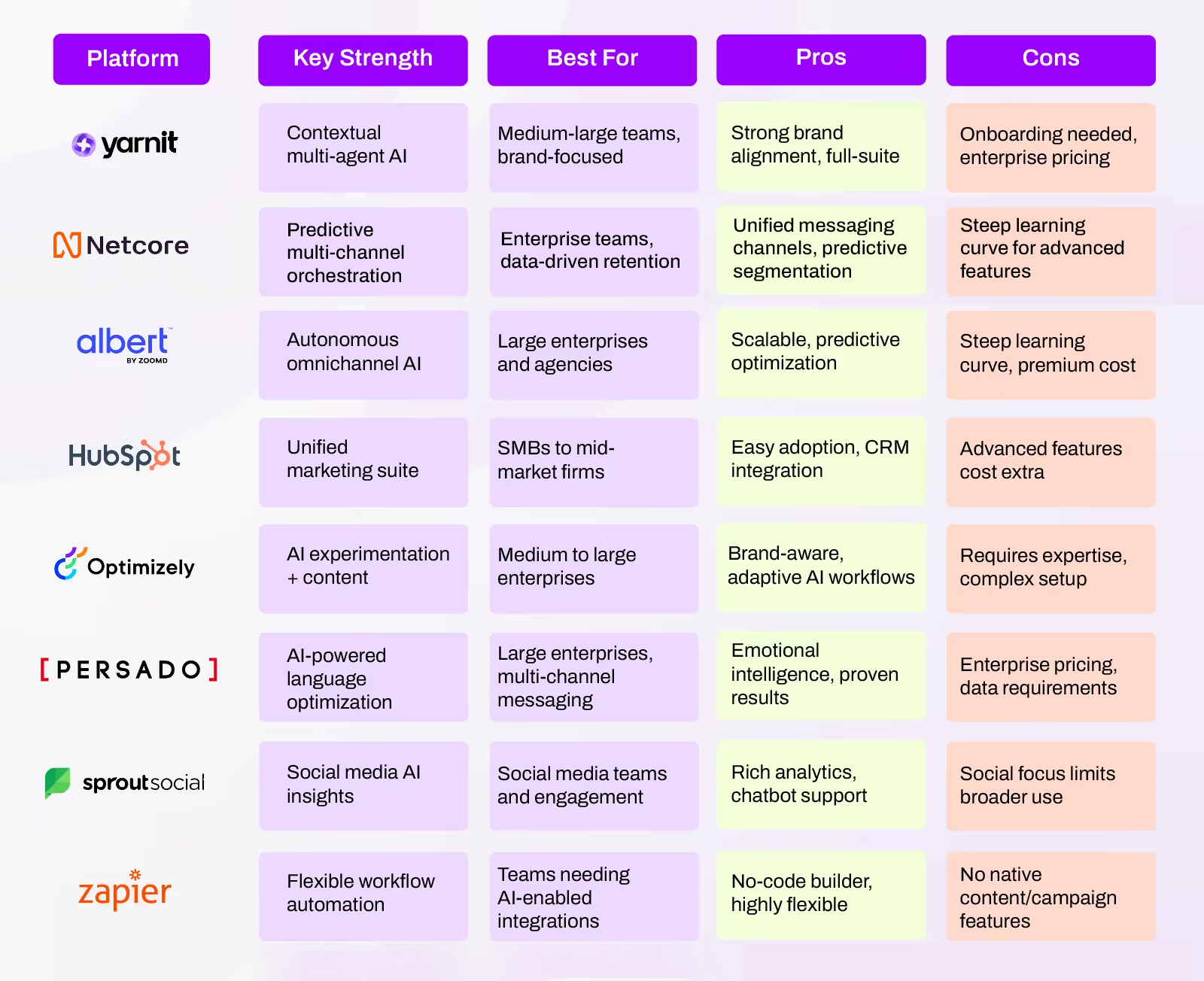
We've analyzed 7 leading agentic AI marketing platforms that are changing how human creativity and artificial intelligence work together. Here's what you need to know about each one.
While enterprise marketing teams talk mainly about metrics and automation features, there's something bigger happening in marketing that most people miss, and that’s how AI is completely changing the way marketing teams actually work together.
Here's what's really interesting: A 2023 McKinsey study found that companies using agentic AI saw their marketing leaders gain more time for strategic thinking. That's huge. Instead of just executing campaigns, marketers are becoming the architects of complex, multi-channel strategies that adapt in real time.
But picking the right AI platform isn't just about features and pricing. You need something that actually fits how your team works, your company culture, and how fast you want to innovate. A majority of companies want to adopt AI for AI’s sake, and don't spend enough time thinking about this fit - and it shows in their results.
We've analyzed 7 leading agentic AI marketing platforms that are changing how human creativity and artificial intelligence work together. Here's what you need to know about each one.
1. Yarnit – Your Complete AI Marketing Team
Yarnit works like having an entire AI marketing team that actually understands your brand. Its Contextual Knowledge Hub learns your brand guidelines, competitive landscape, and messaging style, then applies this knowledge across every piece of content it creates. This isn't just automation - it's intelligent collaboration that maintains your brand voice while handling multiple marketing channels.
The platform breaks down the usual walls between brainstorming, optimizing, creating, and analyzing. Gartner research shows that an integrated approach can speed up time-to-market by 65% compared to juggling multiple tools.
Key Features
Multi-agent AI system that works like specialized team members with different marketing skills
Contextual Knowledge Hub that learns and applies your brand guidelines automatically
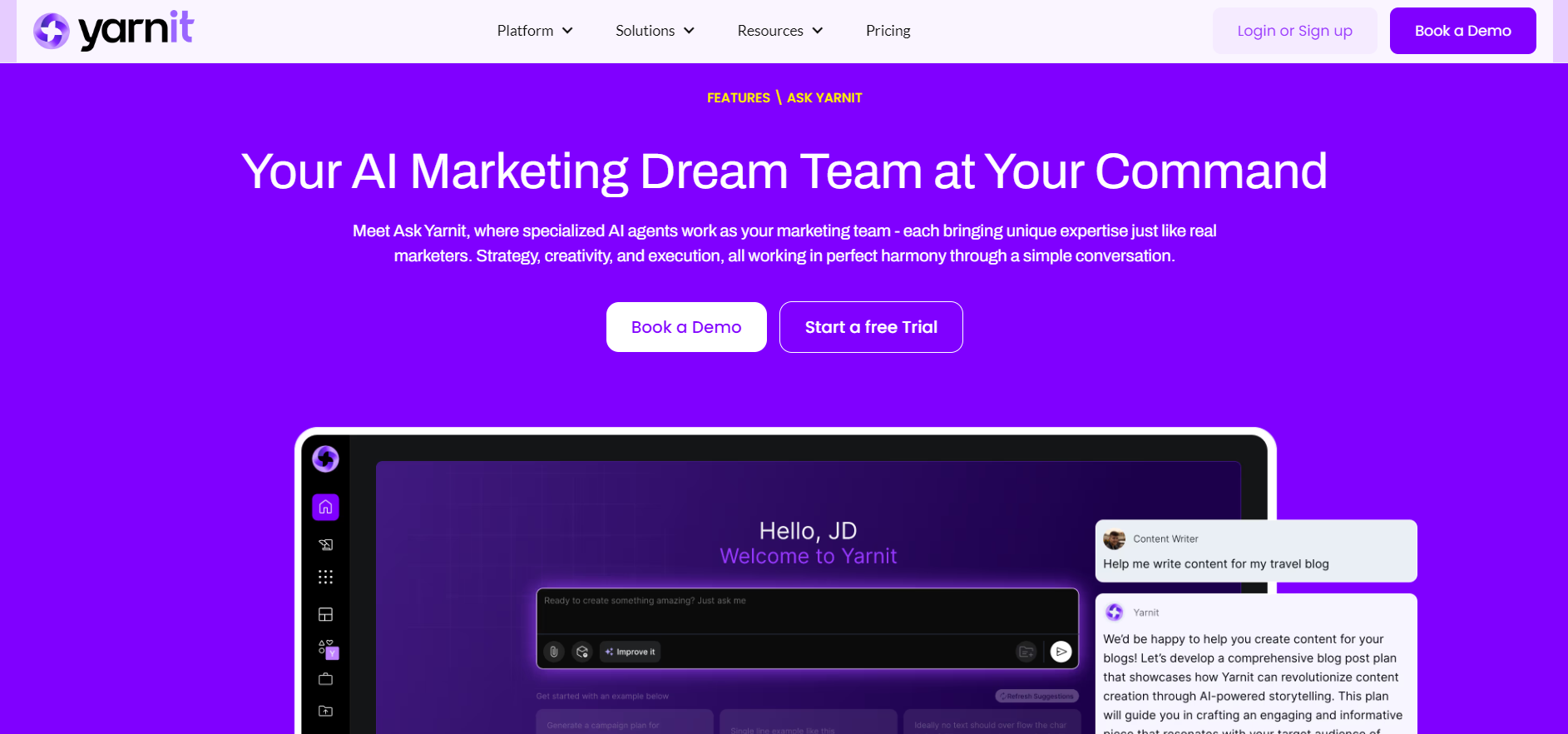
"Ask Yarnit" interface where you can request complex campaigns using normal conversation
Complete marketing toolkit covering content creation, SEO, social media scheduling, and analytics
Team collaboration features with approval workflows
Pros
Keeps your brand consistent - achieving the ideal alignment with established brand guidelines
Cuts campaign creation time by up to 75%, turning weeks of work into days
Replaces about 6 different marketing tools with one integrated platform
Pricing is geared toward mid-size to large companies with established marketing operations
Best For
Medium to large marketing teams that need AI help but can't sacrifice brand consistency
B2B marketers running multi-channel campaigns who want to maintain strategic control
2. Netcore – Agentic Marketing Platform
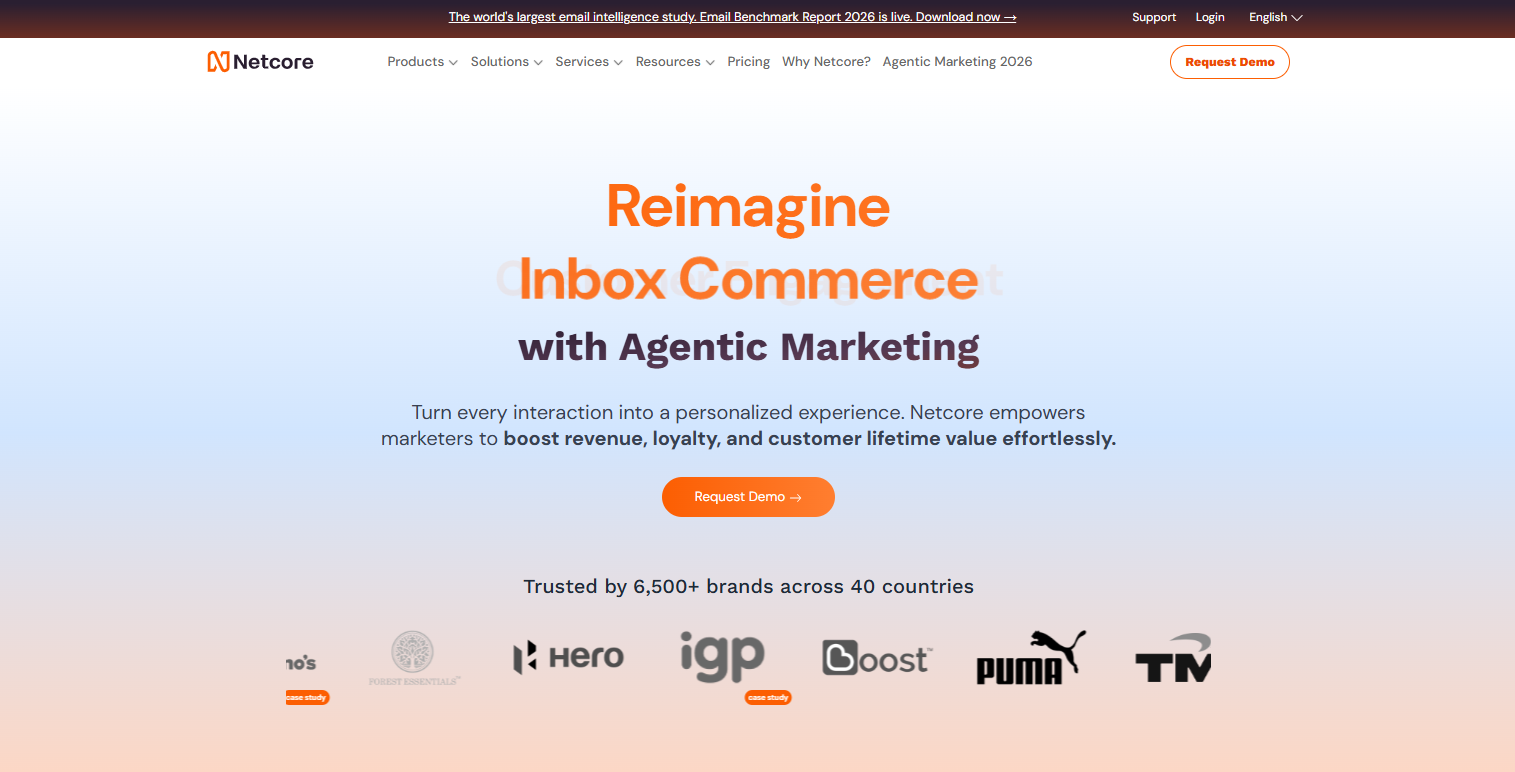
Netcore’s Agentic Marketing Platform connects customer interactions across email, SMS, WhatsApp, RCS, web push, and in-app messaging into a unified ecosystem. Think of it as a predictive engine that anticipates customer behavior, helping marketing teams automate retention campaigns, forecast churn, and personalize customer journeys based on real-time data.
Key Features
Connects and orchestrates campaigns across email, SMS, WhatsApp, RCS, web push, and in-app messaging.
Predictive AI engine that analyzes billions of interactions to forecast churn risk and optimize conversions.
Interactive email capabilities that allow users to browse products, fill forms, and shop directly within their inbox.
Pros
Consolidates multiple disparate messaging channels into a single, unified platform for marketing teams.
Provides highly accurate predictive segmentation to proactively identify and retain at-risk customers.
Cons
Has a steeper learning curve that requires time to fully master the advanced AI and journey orchestration features.
Best For
Enterprise marketing teams needing advanced, multi-channel orchestration and industry-leading email deliverability.
Organizations heavily focused on data-driven retention, churn reduction, and interactive messaging strategies.
3. Albert.ai – Autonomous Campaign Architect
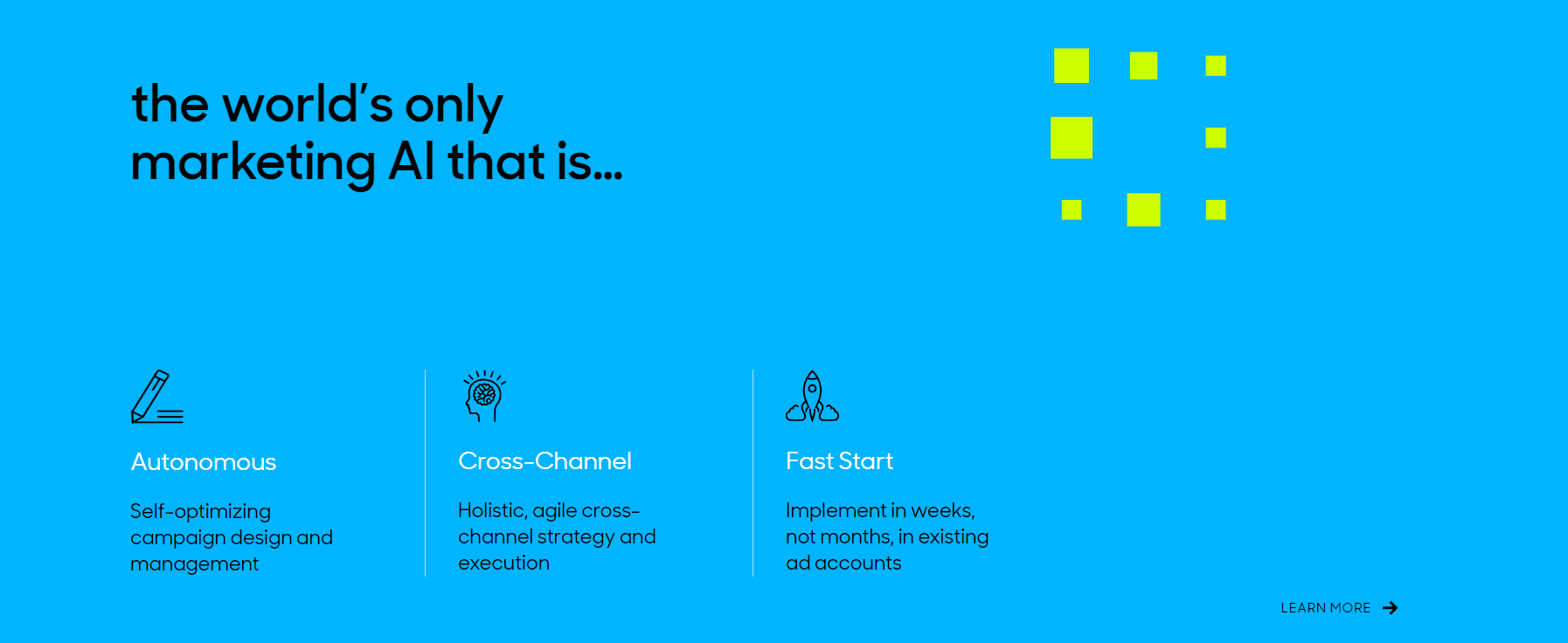
Albert.ai runs your campaigns automatically across social media, search, and email. It uses machine learning to constantly adjust audience targeting, budget allocation, and personalization based on what's working.
What sets Albert apart is its ability to make decisions without human input - it can shift budgets between channels, update ad creative, and refine targeting all on its own.
Key Features
Full campaign automation that predicts performance and adjusts budgets in real-time
Advanced audience targeting using over 200 behavioral and demographic factors
Cross-channel coordination that tracks attribution and ROI across all touchpoints
Pros
Typically reduces customer acquisition costs by 25-40%
Handles complex campaigns with millions of customer interactions daily
Cons
Steep learning curve with setup taking 45-60 days on average
Premium pricing that puts it out of reach for smaller companies
Best For
Large enterprises and agencies managing complex, multi-channel campaigns
Marketing organizations with lots of data who want deep automation
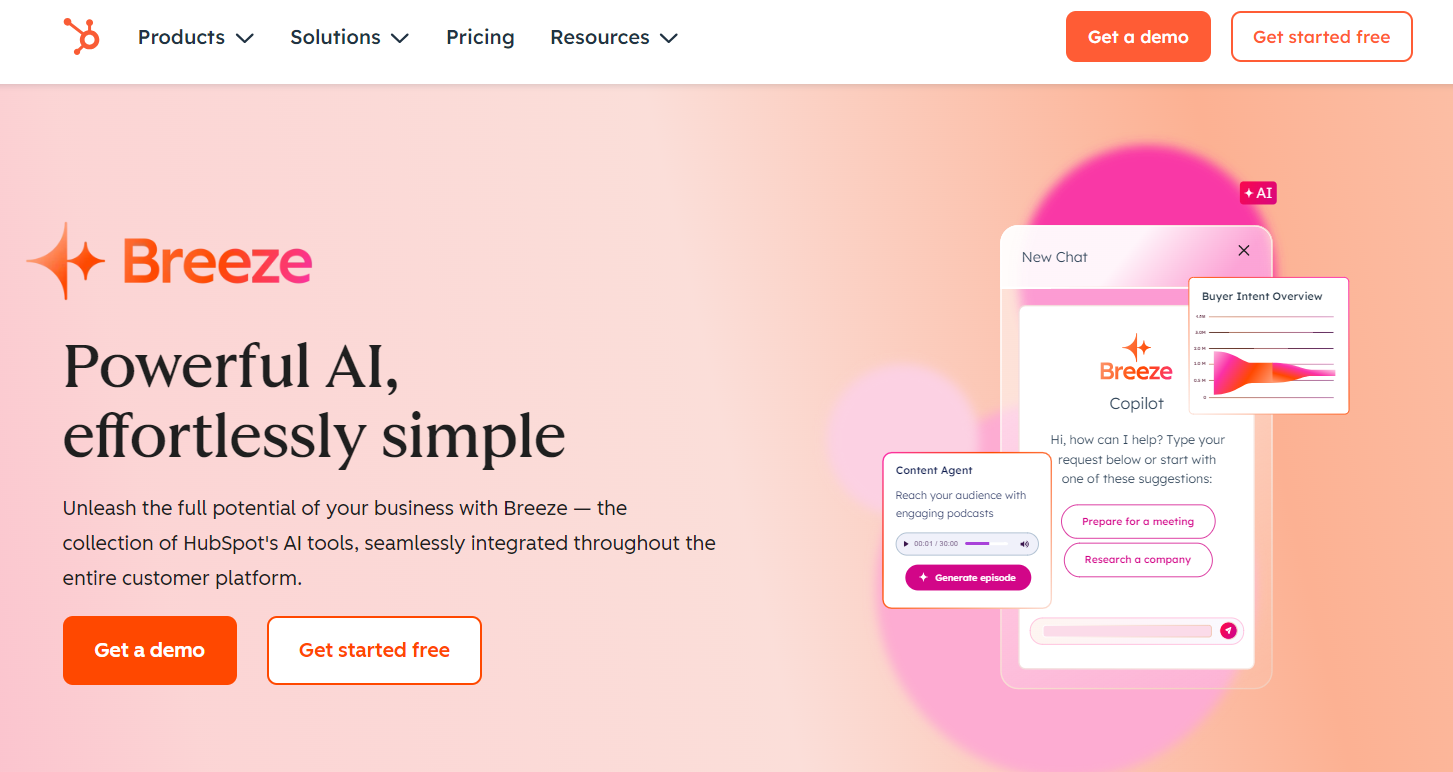
4. HubSpot Breeze – All-in-One AI Marketing Suite
HubSpot's AI features work seamlessly with their popular CRM, offering content creation, social media management, lead scoring, and customer journey automation.
The real strength here is how everything connects. Your sales team can see exactly what marketing AI is doing, and the AI learns from both marketing interactions and sales conversations.
Key Features
AI assistants for content creation, social management, and campaign optimization
Predictive lead scoring with high accuracy for identifying likely conversions
Customer journey automation that personalizes experiences based on real-time behavior
Pros
Easy to use with CRM integration that eliminates data silos
Flexible pricing that works for small businesses and larger companies
Cons
Advanced AI features cost extra in premium tiers
Limited customization for specialized industry needs
Best For
Small to mid-market companies wanting integrated AI tools without technical complexity
Teams focused on lead nurturing and sales-marketing alignment
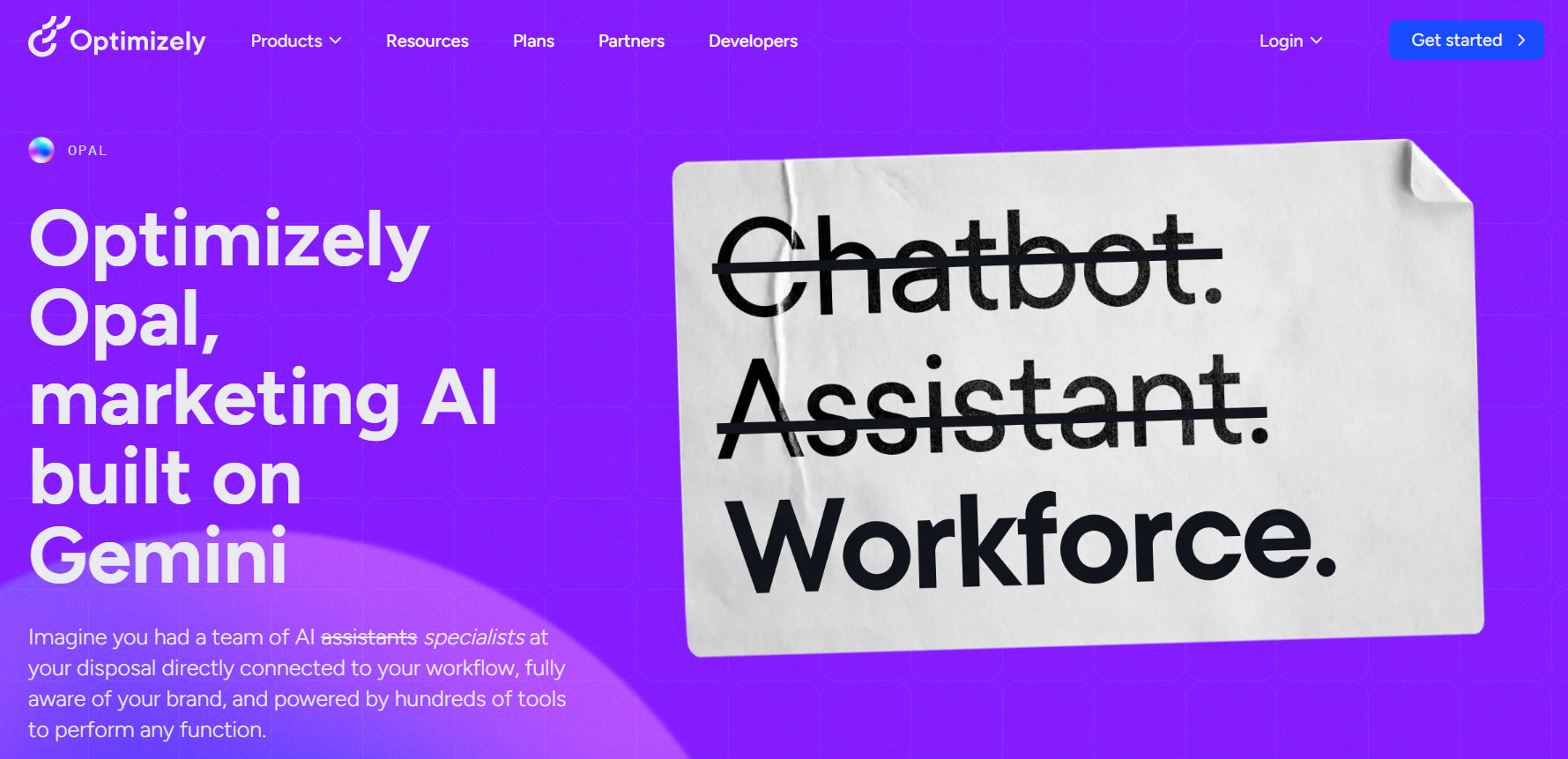
5. Optimizely Opal – AI Agents Orchestrator
Optimizely Opal uses specialized AI agents for SEO, content creation, and campaign testing. Built on Google's Gemini models, it excels at maintaining brand consistency while personalizing content at scale. It's integrated with Optimizely's Digital Experience Platform.
The platform's strength is systematic experimentation - it can test multiple variations of campaigns simultaneously and learn what works best for different audience segments.
Key Features
Specialized AI agents for content optimization, SEO analysis, and performance prediction
Multi-agent workflows that coordinate different AI processes with minimal human intervention
Enterprise integration with Optimizely's comprehensive platform ecosystem
Pros
Excellent brand consistency while maintaining AI efficiency
Automates 68% of routine marketing tasks according to internal data
Enterprises committed to brand-focused, data-driven marketing
Organizations invested in continuous testing and personalization
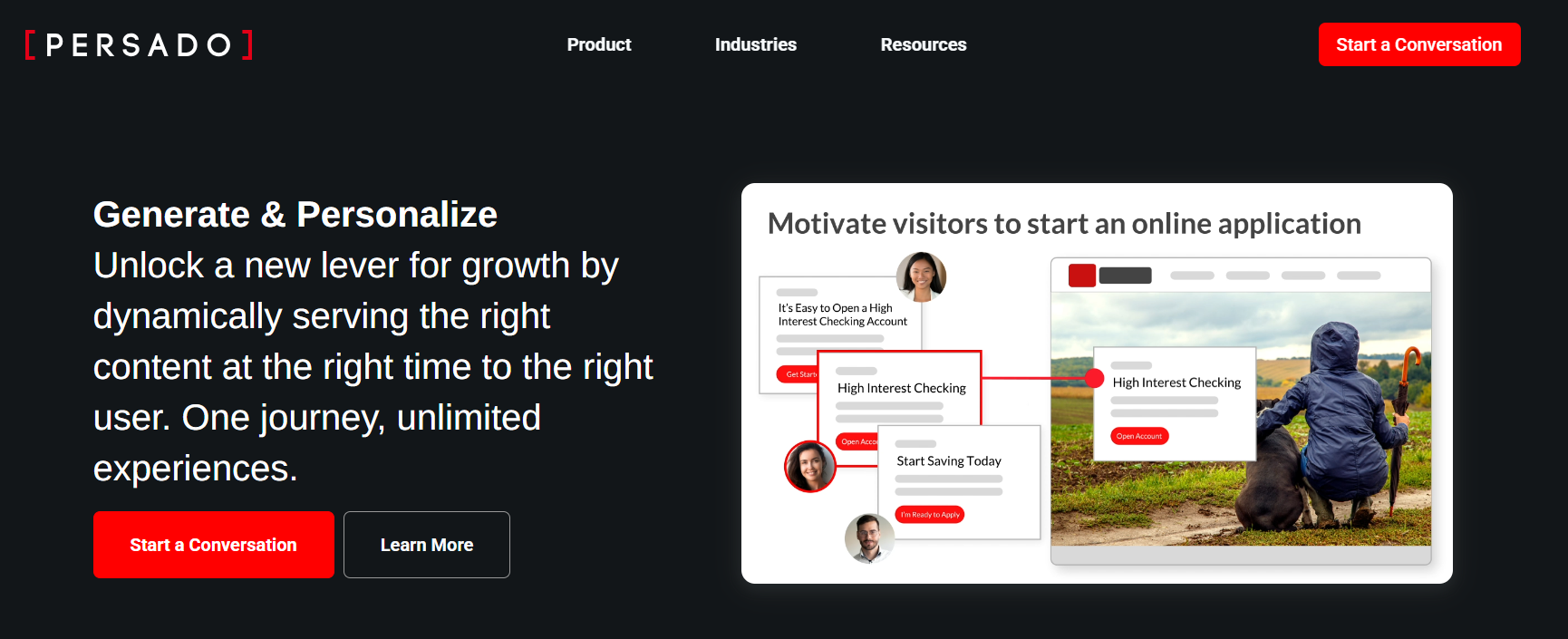
6. Persado – AI-Powered Marketing Language Optimization
Persado focuses specifically on optimizing marketing language by analyzing emotional triggers that make people respond. Their AI determines the exact words, phrases, and emotional appeals that work best for different audience segments across various channels.
Key Features
Motivation AI engine that maps emotional responses across 15 primary dimensions
Channel-specific language optimization for email, web, social, and SMS
Enterprise integration with major marketing platforms and detailed analytics
Pros
Uses emotional intelligence to make marketing language more effective
Consistently delivers higher performance improvements across industries
Cons
Tech stack targeted at serving banks and financial institutions
Needs substantial historical data to work effectively
Best For
Large enterprises looking to optimize marketing language at scale
Organizations with rich customer data and multi-channel messaging
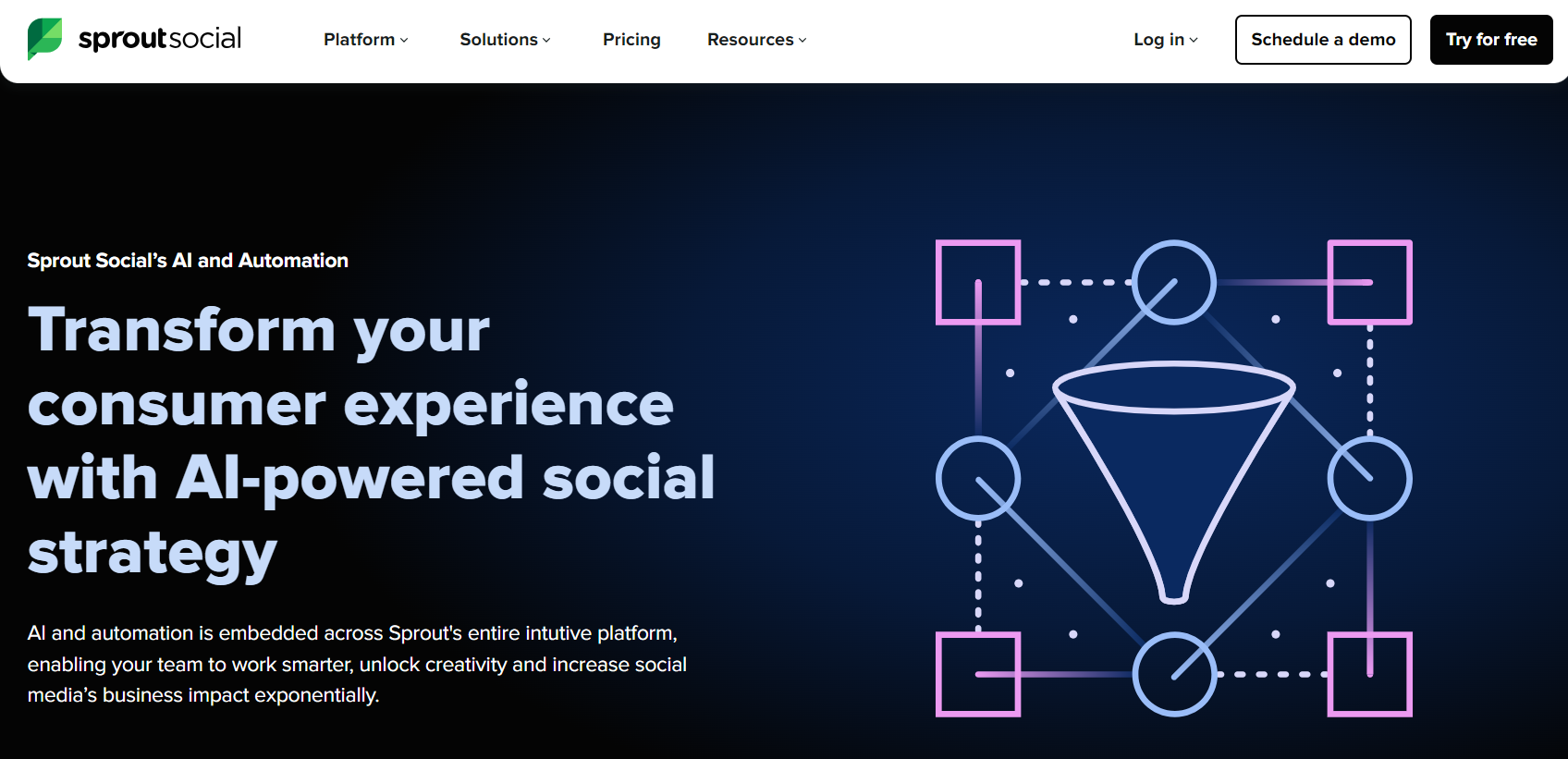
7. Sprout Social – AI-Powered Social Media Manager
Sprout Social combines social media management with AI-powered listening, sentiment analysis, and optimized posting. What started as a social listening tool has become an all-in-one AI social media manager.
The platform excels at understanding social media conversations about your brand and automatically engaging when appropriate, while also optimizing when and what you post.
Key Features
AI-powered social listening with sentiment analysis across 12 emotional dimensions
Optimized publishing based on platform-specific performance data
Integrated AI chatbots for customer support
Pros
Comprehensive social media analytics with competitive benchmarking
Simplifies cross-platform publishing and engagement
Cons
Limited to social media marketing channels
Advanced AI features require premium subscriptions
Best For
Marketing teams heavily focused on social media engagement
Organizations handling customer support through social channels
8. Zapier AI – AI Workflow Automation and Integration
Zapier AI connects different marketing tools and automates workflows between them using AI-powered triggers and smart error detection. Think of it as the glue that makes all your other marketing tools work together intelligently, without needing a developer to set it up.
Key Features
Connects over 5,000 applications through AI-enhanced automation
No-code workflow creation using natural language commands
Automatically syncs lead data, triggers communications, and updates CRM records
Pros
Extremely flexible and adaptable to different marketing tool stacks
Allows non-technical marketers to build sophisticated automations
Cons
Doesn't create content or manage campaigns directly
Requires clear process definition to work effectively
Best For
Marketing teams needing custom automation across different platforms
Organizations with disconnected marketing systems requiring integration
Conclusion
Agentic AI marketing platforms are changing how marketing works by automating complex tasks with smart, context-aware systems. Gartner's 2024 Marketing Technology Survey shows organizations using these tools see 49% impact on time efficiency.
For marketing teams looking to significantly improve efficiency, creative output, and campaign results in 2025 and beyond, choosing the right agentic AI marketing tool is one of the most important decisions you'll make. We recommend testing these platforms thoroughly, finding the one that fits your specific workflow needs, and implementing it systematically to get the most value from AI-enhanced marketing.
For hands-on AI marketing guidance and automation workflows specifically designed for B2B marketing organizations, visit Yarnit.
See exactly why your Product Detail Page isn't converting
Thank you! Your submission has been received!
Oops! Something went wrong while submitting the form.
Frequently Asked Questions
How is AI changing the way marketing teams collaborate?
AI enables marketing teams to work around shared data, not silos. It automates coordination, surfaces insights in real time, and aligns creative, media, and analytics teams—making collaboration faster, smarter, and more adaptive to changing campaign goals.
What factors should companies consider before choosing an AI marketing platform?
Beyond features, consider how the AI platform fits your team’s workflow, culture, and pace of innovation. Look for integration ease, transparency, and collaboration support—so it enhances human creativity instead of adding complexity.
How is agentic AI transforming marketing from execution to strategy?
Agentic AI lets marketers focus on strategy, not routine execution. It continuously optimizes campaigns, predicts outcomes, and adapts across channels—turning marketers into architects of dynamic, real-time strategies.
How can marketing teams make AI adoption more effective?
Start small—automate one workflow like audience segmentation or content analysis before scaling. Involve the end users early, set clear success metrics, and train teams on interpreting AI outputs. Adoption succeeds when AI becomes a natural part of existing processes, not an extra layer.
How do agentic AI platforms bridge the gap between human creativity and automation?
These platforms use data to inform creative decisions—suggesting variations that resonate better with each audience segment. They don’t replace creators but test, measure, and refine ideas faster than humans could, helping teams learn what actually works.