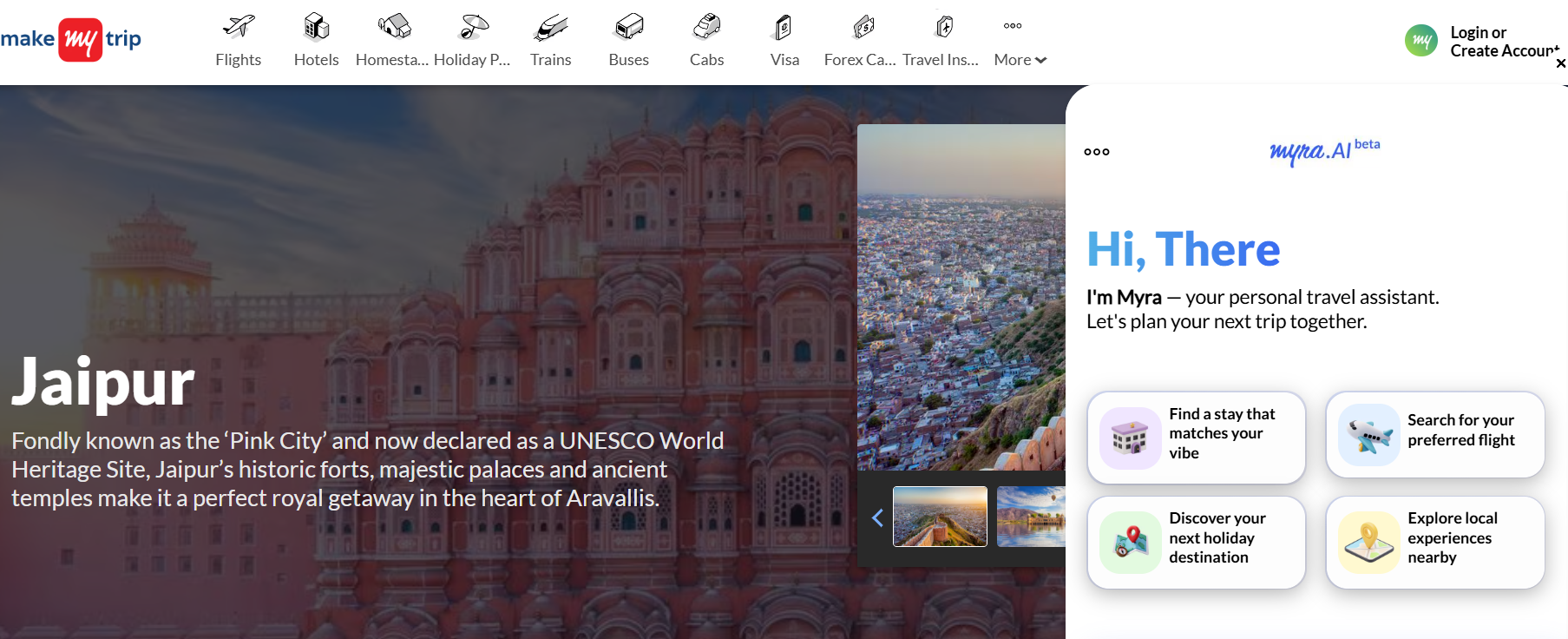
What if planning a holiday was just a few chats away? That’s exactly what MakeMyTrip’s Myra AI does. Built on a network of multiple AI agents, it helps users plan trips, book flights and hotels, and handle cancellations or refunds—all in one seamless conversation.
And it’s not just travel. Many brands are now using similar systems to guide shoppers, resolve payment or delivery issues, and give advice that actually feels helpful and personal.
That’s why 79% of businesses are already using AI agents and 88% plan to increase their budgets for them in the next year. Customers get answers faster, while teams can focus on the problems that truly need a human touch.
The best part? These smart AI assistants work 24/7, handling routine issues instantly so human agents can focus on complex cases. It's a win for customers who get instant resolutions and companies that boost efficiency.
Now, let’s break down how agent-powered assistants support sales and marketing in a practical, everyday way.
Why AI Agents Are Changing the Game
Early chatbots were rigid tools confined to basic decision trees and predefined scripts. They could answer simple FAQs or route requests, but their capabilities were limited to narrow scenarios. Now, we're dealing with something entirely different—AI agents that work alongside human teams.
Modern AI chatbots are full-fledged AI agents embedded within a broader tech stack. They integrate with your CRM systems, analytics tools, and customer services stack.Take Salesforce's Agentforce - it's not just answering questions, it's helping service reps by pulling up customer histories, suggesting solutions, and even drafting responses. Or Google's Agent Assist, which listens in on support calls to surface real-time knowledge articles and troubleshooting guides.
These aren't chatbots - they're AI teammates. Let’s take a look at how these teammates change roles in sales and marketing.
AI Agents in Sales
Leads that actually convert: Tools like Salesloft’s Drift pre-qualify leads by asking targeted questions so sales reps only get hot leads. No more wasting time or resources on tire-kickers.
First impressions: When a prospect messages at midnight about pricing, agents like Intercom's Fin delivers instant, accurate answers—making your brand look sharp before a human even gets involved.
Sell around the clock: HubSpot's ChatSpot handles routine queries (contract terms, feature specs) 24/7, freeing reps to focus on closing deals rather than answering the same questions repeatedly.
AI Agents in Marketing
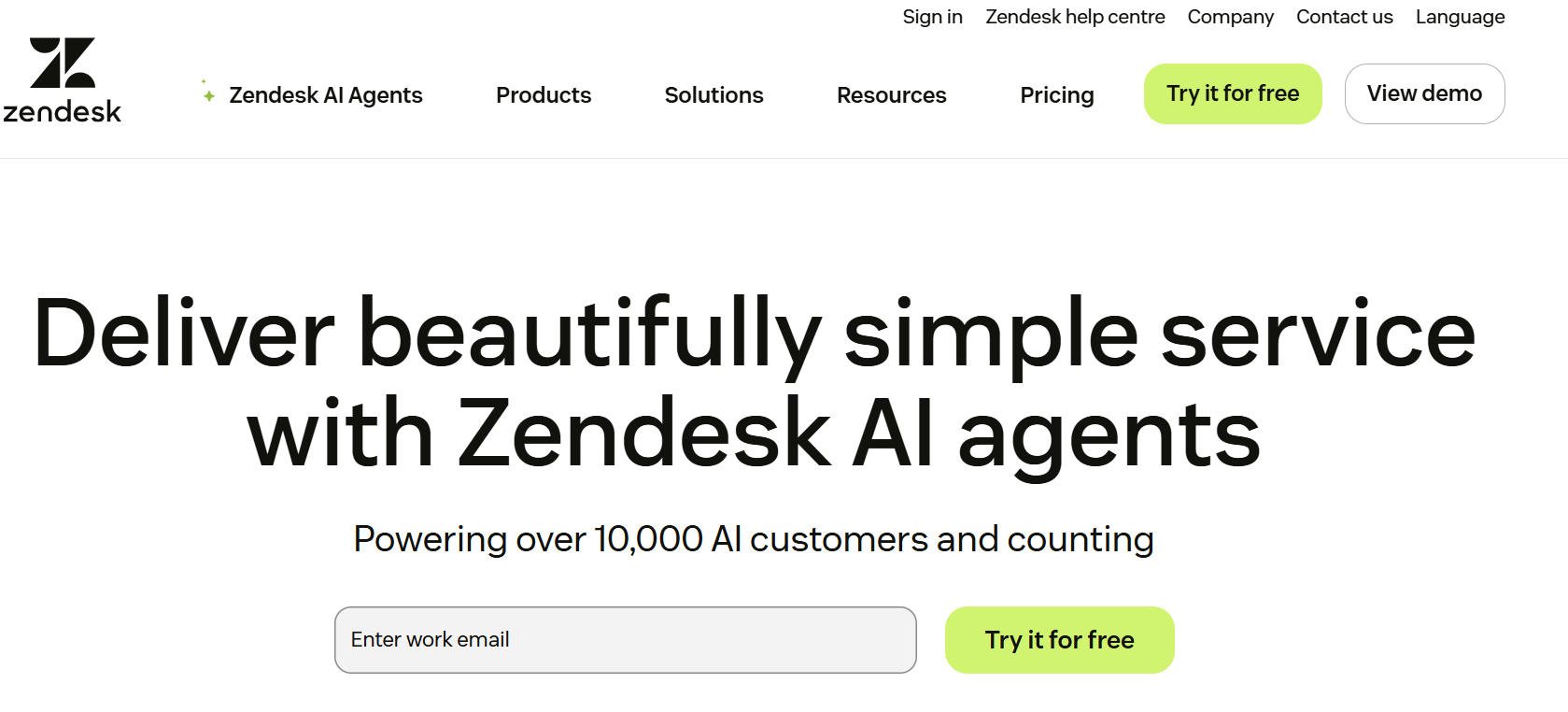
Create content that solves problems: Customer service agents can reveal exact customer pain points. Marketers can turn these into targeted blogs, tutorials, or case studies that address real needs. When Zendesk's AI spots 50 customers asking "How do I connect this to Slack?”, there's your next blog post or tutorial video.
Case studies that write themselves: AI tools like Gong analyze thousands of support chats to find perfect customer quotes, scenarios and success stories. These become goldmines for crafting relatable success stories or highlighting common objections.
A finger on the pulse: If Freshdesk's bot suddenly sees spikes in "login issues," marketers can blast out a fix-it guide before the complaints hit social media.
For sales - it's like having a tireless junior rep. For marketing - it's an always-on focus group. And for customers? It's finally getting help that doesn't feel like talking to a brick wall.
AI Agents Applications : Transforming Customer Journeys
To see how modern AI agents have changed customer experiences, let’s follow Alex, a hypothetical customer interacting with EcoGear, an outdoor apparel brand. His journey shows how AI assists at every stage—while keeping the human touch ready when needed.
1. First Contact: Instant Answers Replace Website Hunting
Alex visits EcoGear’s site, wondering which hiking backpack fits a 15” laptop and has waterproof zippers. Instead of digging through product filters, he types his question into the chatbox. In seconds, a smart agent responds: “The TrailMaster 35L has a padded laptop sleeve and weather-sealed zippers—here are photos and a video demo.” It even adds: “73% of customers pair this with our rain cover—want to see that too?”
Why it works: 71% of customers prefer chatbots for quick product questions, and EcoGear’s AI cuts research time from minutes to seconds.
2. Consideration: Smarter Than a Sales Associate
When Alex hesitates between two backpacks, the smart agent doesn’t just list features—it asks, “Will you be traveling or daily commuting?” Based on his answer (“Mostly weekend trips”), it recommends the lighter model and links to a blog post comparing pack weights for different trips. Later, it emails him a sizing guide after noticing he clicked on “fit” questions twice.
Behind the scenes: The AI agent tracks behavior (pages viewed, time spent) to time suggestions perfectly—no human could monitor this so precisely.
3. Purchase: Fixing Problems Before They Happen
At checkout, Alex’s payment fails. Before he can panic, the chatbot intervenes: “Bank declines often happen with international cards—try a different payment method, or we can invoice you via PayPal.” It even offers a one-time 5% discount for the hassle.
The result: EcoGear recovers 60% of failed checkouts this way, compared to 20% with generic error messages.
4. Delivery & Support: Proactive Peace of Mind
When a warehouse delay affects Alex’s order, the AI doesn’t wait for him to complain. It sends a message: “Your backpack is running 2 days late—we’ve upgraded you to express shipping at no cost.” For his next question (“How do I clean the fabric?”), the chatbot pulls up a video tutorial but adds: “Or I can connect you to our gear specialist for deeper advice.”
Key stat:74% of users prefer chatbots for simple support issues like tracking or care instructions.
5. Loyalty: Remembering What Humans Might Forget
A year later, Alex messages, “Need new hiking shoes—what matched my TrailMaster backpack?” The chatbot recalls his purchase history and color preference, suggesting shoes that fit his style. When he asks about a warranty claim, it pre-fills a form with his order details and schedules a video call with support—all in one thread.
The magic: AI handles the routine (order lookups, form filling) so human agents can focus on complex warranty questions.
6. Retention: Personal Content That Feels Hand-Crafted
Three months after his purchase, Alex receives an email titled "Your TrailMaster's First Adventure?" The marketing team used Yarnit’s team of AI agents to efficiently create personalized content including seasonal trail recommendations and maintenance tips specific to his backpack model using the Audience Profile feature. When Alex opens the email featuring waterproofing techniques for his specific gear, he finds relevant, high-quality content that addresses his exact needs as an outdoor enthusiast with new equipment.
Behind the scenes: EcoGear's marketing team uses Yarnit’s Brand Hub to segment customers into distinct cohorts—new buyers, seasonal hikers, photography enthusiasts, and ultralight backpackers. Each segment receives tailored content without requiring marketers to create everything from scratch.
As a dedicated content platform,Yarnit helps marketers create and organize relevant materials for different customer segments without complex integrations or behavior monitoring.
There are 3 simple reasons why this flow wins:
For the customer: It feels like every interaction is personalized, without awkward repeats or delays.
For companies: Chatbots handle 65% of routine queries while staff tackle high-value issues.
For processes: AI does the heavy lifting, but humans step in exactly when empathy or expertise is needed—making technology feel invisible.
For marketing: AI agents excel in both push and pull strategies—delivering targeted promotions when customers need them, while also being available 24/7 to engage and assist on demand.
Think of a smart chat on your website, available to help people navigate the site, and your offerings, easier. This goes to show that the best customer experiences aren’t just fast or convenient—they’re intuitive. And that’s exactly what AI agents promise to deliver.
Tools like Yarnit make this easier with features like the Brand Hub, where you can upload your brand guidelines and product knowledge. This allows the AI to generate responses that sound distinctly you—consistent, contextual, and on-brand.
Customer Engagement Powered by AI Agents
The integration of AI agents within customer engagement strategies has become essential for businesses seeking to create efficient, adaptive, and customer-centric experiences. As we've seen, these intelligent assistants provide immediate responses, personalized interactions, and 24/7 availability—fundamentally transforming how companies connect with their audiences.
While customer-facing chatbots excel at handling routine inquiries and providing consistent support, this isn’t all that AI agents can do. Yarnit goes beyond typical LLMs and off-the-shelf AIs, offering to you a complete AI marketing team. By bringing together a team of 10+ AI agent experts which can communicate with each other, they handle complex marketing queries smartly.
With a single ‘Ask’, you can combine storytelling expertise with rich data from industry sources and APIs to craft personalized campaigns, generate creative content, and provide strategic marketing insights
See exactly why your Product Detail Page isn't converting
Thank you! Your submission has been received!
Oops! Something went wrong while submitting the form.
Frequently Asked Questions
What are AI agents in customer service?
AI agents are intelligent digital assistants that use artificial intelligence to understand, respond, and resolve customer requests quickly, often integrating with CRM systems and analytics tools to deliver personalised support.
How do AI agents differ from traditional chatbots?
Unlike basic chatbots that follow scripted paths, AI agents adapt conversation flows based on real-time data, customer behaviour, and contextual understanding—making interactions far more effective.
Can AI agents work alongside human support teams?
Yes. AI agents handle routine queries and data retrieval, allowing human agents to focus on complex, empathy-driven issues.
How do AI agents benefit sales and marketing teams?
In sales, AI agents pre-qualify leads and manage instant engagement. In marketing, they identify trending customer issues, create relevant content, and manage targeted promotions.
Are AI agents suitable for small businesses?
Absolutely. AI agents scale easily, offering cost-effective automation for customer service, content creation, and lead management without requiring large operational teams.