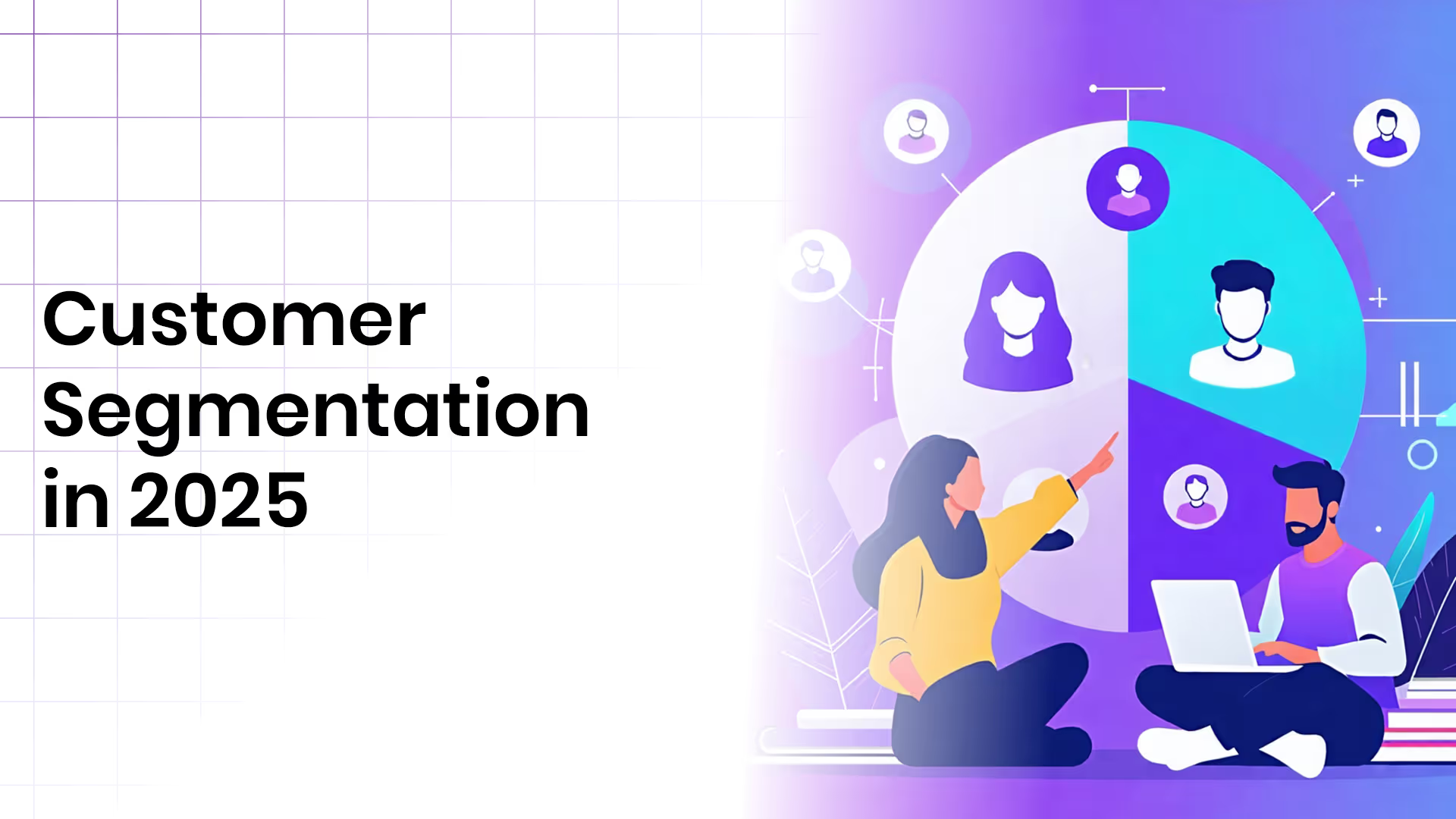
Discover how AI-powered customer segmentation creates deeper audience insights for truly personalized marketing. Learn to craft targeted content that resonates with each segment.
What if Starbucks served the same espresso to every customer—no customizations, no choices? Sales would decline. Why? Because people expect experiences tailored to their tastes.
Today, customer segmentation is no longer just about age or income—it's about understanding lifestyle and behavior. Traditional methods fail to capture this complexity, and that's where things break.
This is where AI-powered customer segmentation comes in. Instead of relying on oversimplified data, AI analyzes deeper behavioral patterns to provide more accurate, actionable insights. In fact, 73% of marketers say AI is crucial for delivering personalized customer experiences.
Netflix provides a great example. With over 282 million subscribers, it uses AI to recommend content based on your viewing habits. If you watched thrillers, it suggests similar movies or shows, ensuring a personalized experience for every user.
AI-driven customer segmentation transforms how you understand and interact with your audience. By focusing on behavior and preferences rather than outdated demographic data, AI enables more relevant, personalized engagement. Forward-thinking brands are already experiencing the benefits, with stronger connections and more effective results. Let's dive into how AI is transforming customer segmentation and how you can apply these insights to your marketing strategy.
Demographics: The Essential Foundation
Despite technological leaps, demographics remain the cornerstone of effective customer segmentation. These essential data points include:
Age and generation cohorts
Income and economic status
Education level
Gender and family status
Occupation and industry
These data points create the foundation that all advanced customer segmentation is built on.
Getting the Basics Right: The Four Pillars of Segmentation
Even as technology advances, the fundamental segmentation categories remain crucial for marketers to understand:
Demographic Segmentation
Dividing markets based on variables like age, gender, income, education, and family size. While seemingly simple, demographic data remains vital for initial market division and providing context for more advanced insights.
Geographic Segmentation
Categorizing customers based on location—from broad regions to specific neighborhoods. In 2025, geographic data has become increasingly precise, allowing for hyperlocal targeting in customer segmentation strategies.
Psychographic Segmentation
Classifying audiences based on psychological attributes like values, beliefs, interests, aspirations, and lifestyle choices. This dimension has grown increasingly important as consumers expect brands to align with their personal values and identity.
Behavioral Segmentation
Grouping customers based on their actions and decisions—purchasing habits, brand interactions, product usage, and loyalty status. This area has seen the most dramatic transformation through AI, with behavioral prediction becoming remarkably accurate.
Beyond Basic Demographics: AI-Driven Customer Segmentation in 2025
Traditional segmentation relies on simple categories like age, location, and gender, which fall short with today's complex consumers. Consider this: traditional segmentation identifies Michael as a 42-year-old from Boston. AI-driven customer segmentation reveals Michael’s browsing history, abandoned carts when seeing shipping costs, and purchases after comparing options across devices. This depth transforms marketing from broadcasting to meaningful conversation.
Here's a practical guide to implementing this approach in your organization:
Starting with Your Demographic Foundation
Even with AI's capabilities, solid demographic data forms the essential starting point for customer segmentation:
Progressive Profiling: Deploy AI-powered forms that gather information gradually across interactions, adapting questions based on previous responses
Zero-Party Data Collection: Use conversational AI interfaces that make preference-sharing feel valuable rather than intrusive
Identity Resolution: Implement platforms like Unified ID 2.0 to maintain consistent and regulatorally compliant profiles across touchpoints
Enriching with Behavioral Tracking
Basic pageview tracking is so last decade. Try these tools to capture meaningful patterns:
Intent Recognition: Platforms like Amplitude and Mixpanel can now interpret complex interaction patterns to identify underlying customer intent
Journey Reconstruction: Platforms like Dreamdata AI stitch together fragmented customer journeys across devices with up to high accuracy
Identifying Critical Behavioral Breakpoints
AI excels at detecting subtle shifts in behavior that indicate changing needs.
Purchase Intent Signals: Commerce Layer AI recognizes browsing patterns that precede conversion
Churn Risk Indicators: DataRobot AutoML combines usage decline with competitive research signals
Interest Evolution: Algolia Recommend AI tracks category interest shifts through content consumption patterns
Building Multi-Dimensional Segments
Modern segmentation goes beyond basic clustering:
Hybrid Modeling: Combine unsupervised learning (discovering natural patterns) with supervised approaches (optimizing for business outcomes) using platforms like DataIku
Dynamic Micro-Segmentation: Create real-time segments that respond to immediate context using Snowflake Streams
Causal Segmentation: Identify which behaviors actually drive outcomes using tools like DoWhy that determine causal relationships
Start with 3-5 major behavioral segments and gradually increase granularity as you validate business impact through controlled tests.
A bigger project would be to construct "digital twin" models of each customer segment that simulate responses to new offers before actual deployment.
Practical Applications of Rich Customer Segmentation
Building Customer Lifetime Value
By analyzing customer purchase history and browsing behavior, marketers can identify precise upselling and cross-selling opportunities. Using tools like Salesforce's AI solutions, you can set up automated workflows to trigger timely renewal offers or suggest complementary services based on usage patterns.
Content Customization
Marketers can leverage analytics platforms to determine which content formats and topics resonate with different customer groups. When your data reveals some customers engage more with certain content types, you can deliver content in those formats. Tools like Yarnit enable you to efficiently create tailored content that resonates with different target audiences in minutes.
Predictive Customer Journey Mapping
With advanced analytics tools, marketers can examine historical data patterns to predict future customer actions, allowing you to anticipate needs before they arise. Implement proactive engagement strategies by scheduling product replenishment reminders just before customers run out or offering solutions to potential issues before customers experience them.
Churn Prevention
By establishing early warning systems within your customer data platforms, you can identify behavioral signals indicating potential disengagement well before traditional metrics show a problem. These insights allow you to implement targeted retention strategies for specific at-risk segments, addressing concerns before customers consider leaving. Platforms like HubSpot or Klaviyo can help automate these re-engagement campaigns based on the specific signals your analysis uncovers.
Pricing Optimization
Through careful analysis of purchase patterns across your customer base, you can identify price thresholds for different segments. This data enables you to implement strategic pricing that maximizes both conversions and profit margins. Consider offering premium options to segments that prioritize quality over price while providing value-oriented bundles to price-sensitive segments.
Building Deeper Customer Connections
As customer expectations evolve, delivering tailored experiences requires both quality data and effective tools. Strong data governance practices form the foundation of AI-driven segmentation—when your data is clean, comprehensive, and current, your marketing efforts yield meaningful results. The best marketers pair AI's analytical capabilities with human creativity to transform customer insights into compelling narratives that connect with each unique segment
When implementing customer segmentation, it’s essential to choose tools that align with your marketing goals and integrate seamlessly with existing systems. Platforms like Yarnit, which offers features such as the Brand Hub, enable marketing teams to analyze customer data, extract actionable insights, and implement advanced segmentation strategies—without requiring extensive technical expertise. By focusing on both data quality and the right technology, your team can deliver personalized engagement that strengthens customer relationships and drives measurable business results.
See exactly why your Product Detail Page isn't converting
Thank you! Your submission has been received!
Oops! Something went wrong while submitting the form.
Frequently Asked Questions
What is customer segmentation?
Customer segmentation is the process of dividing your audience into groups based on demographics, behaviors, or preferences to deliver more targeted experiences.
Why is AI important for customer segmentation in 2025?
AI improves customer segmentation by analyzing behavioral patterns, predicting intent, and creating real-time micro-segments that traditional methods can’t capture.
How is customer segmentation different from demographics alone?
Demographics provide a basic foundation, while customer segmentation with AI adds layers like psychographics, behaviors, and preferences for a fuller picture.
What are some examples of AI-driven customer segmentation?
Examples include predicting churn risk, customizing content, mapping customer journeys, and optimizing pricing based on behavior.
Which tools support AI-powered customer segmentation?
Platforms like Yarnit help implement advanced customer segmentation strategies with actionable insights.