A work anniversary notification popped up on my page, but this time, it was different. My LinkedIn post didn't just get likes; it sparked interview requests. Months of strategic content had transformed my profile from a digital dust collector to a recognizable industry voice.
I used to scroll through LinkedIn, wondering about the magic formula of influencers. And this guide is for anyone ready to move from invisible to influential, not just the naturally gifted. LinkedIn isn't just a resume; it's often your first impression. Recruiters, clients, collaborators—they're all here. And heightens the significance of your digital presence. In a world where 87% of recruiters use LinkedIn and decision-makers spend 74 minutes weekly consuming content, your digital presence isn't supplementary; it's the main event.
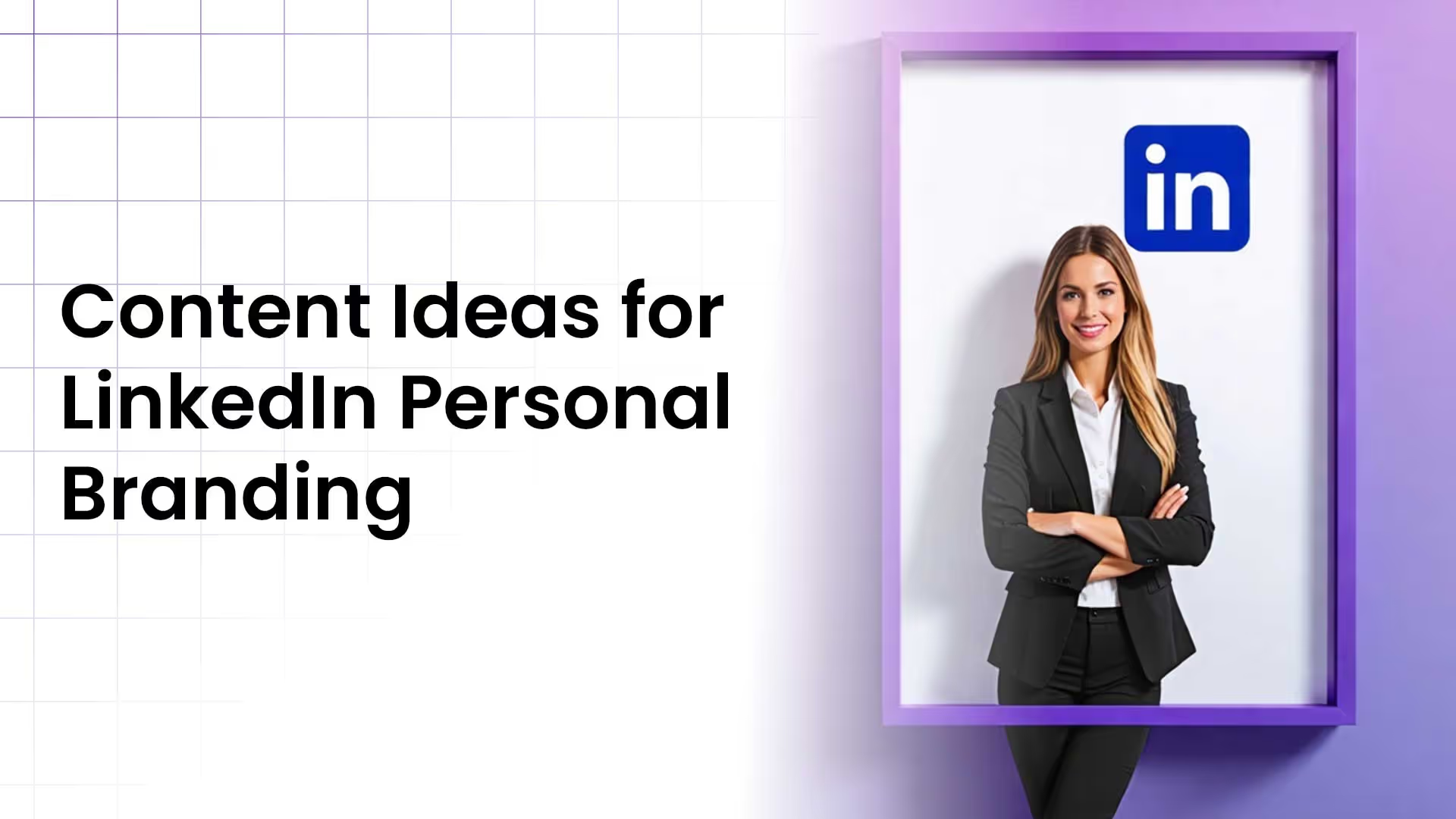
I’ve put together best practices, focusing on content ideation backed by contextual intelligence. It isn’t just about posting more. This guide provides you with 10 proven content frameworks, complete with strategic rationales, creation guidance, and AI-assisted prompts. Let us take a closer look at how you can cut through the noise and give you the tools to make your LinkedIn presence count.
The Value of Personal Branding: Why It Matters
Before diving into specific content ideas, let's explore why personal branding deserves your attention and resources.
Personal branding is the process of developing a "mark" that is created around your name or career. You use this "mark" to express and communicate your skills, personality, and values. In an increasingly digital world, your personal brand exists whether you actively cultivate it or not—the question is whether you'll take control of the narrative.
Benefits of a Strong Personal Brand
- Professional Differentiation: A personal brand helps you stand out by highlighting your unique attributes and expertise
- Increased Credibility: Consistent demonstration of knowledge builds trust with your audience
- Greater Recognition: A well-established personal brand increases visibility within your industry
- Premium Positioning: Strong personal brands often command higher compensation rates and better opportunities
Research by CareerBuilder found that 70% of employers use social media to screen candidates during the hiring process. LinkedIn, being the professional platform of choice, is often the first place potential employers or clients look when researching you professionally.
LinkedIn's Role in Personal Branding
LinkedIn offers unique advantages as a personal branding platform that other social networks simply can't match:
- Professional Focus: The platform is designed specifically for professional networking and career development
- Content Longevity: Unlike other platforms where content quickly disappears in feeds, LinkedIn posts typically enjoy longer visibility
- Algorithm Advantages: LinkedIn's algorithm often favors individual users over companies, giving personal brands greater reach
- Built-in Credibility: Being active on LinkedIn automatically lends professional credibility to your personal brand
- Decision-Maker Presence: According to LinkedIn, 4 out of 5 members drive business decisions, making it a valuable platform for B2B connections
Now, let's explore ten powerful content ideas to elevate your personal brand on LinkedIn.
LinkedIn Content Idea #1: Share Your Professional Journey
Key Components
This content type involves sharing significant milestones, challenges, and lessons from your professional journey. It's about opening up about your career path—including the successes, failures, pivotal decisions, and experiences that have shaped your professional identity.
Value to Your Personal Brand
Sharing your professional journey humanizes your brand and creates relatability. It demonstrates authenticity and vulnerability, which are powerful connectors in professional relationships. Furthermore, it provides context for your expertise, showing not just what you know, but how you came to know it—adding depth and credibility to your personal brand.
How to Generate This Content Consistently
- Create a career timeline: Map out key moments in your professional history
- Identify turning points: Note decisions or events that significantly altered your path
- Extract lessons: For each milestone, identify the key takeaways that might benefit others
- Connect to current trends: Relate your experiences to current industry developments
- Use "career anniversaries" as natural prompts to reflect on your journey
For maximum engagement, include before-and-after comparisons, specific metrics of growth, and authentic emotions tied to your experiences. Photos from different career stages also perform exceptionally well.
AI Content Prompt
Create a LinkedIn post about a significant turning point in my professional journey. I want to share my experience of [SPECIFIC CAREER MOMENT] when I [ACTION TAKEN]. The key lesson I learned was [LESSON]. This experience changed my approach to [AREA OF WORK] by [HOW IT CHANGED YOU]. Include a hook that will resonate with [TARGET AUDIENCE] and end with a question that invites others to share similar experiences.
LinkedIn Content Idea #2: Industry Insights and Trend Analysis
Key Components
This content type focuses on sharing your perspective on current industry trends, new developments, or emerging patterns in your field. It involves analyzing news, research findings, or market shifts and offering your informed opinion on what these changes mean for professionals in your space.
Value to Your Personal Brand
Regularly sharing insightful analysis positions you as a forward-thinking industry observer with valuable perspective. It demonstrates that you're actively engaged with your field's evolution and capable of contextualizing changes in meaningful ways. This content type is particularly valuable for establishing thought leadership and showing that you're not just keeping pace with industry changes—you're helping others understand them too.
How to Generate This Content Consistently
- Use AI tools like Yarnit to discover news and events aligned to your choices and create content. Yarnit Idea generator is an extremely convenient way to do this
- Set up industry news alerts through Google Alerts or specialized publications
- Follow key industry influencers and organizations on LinkedIn and other platforms
- Schedule weekly "trend spotting" time to review industry developments
- Subscribe to relevant research reports and industry analyses
- Create a content calendar that includes regular trend analysis posts
For deeper impact, connect multiple trends to identify patterns others might miss, reference historical context to show evolution, and always conclude with actionable implications for your audience.
AI Content Prompt
Create a LinkedIn post analyzing the recent trend of [SPECIFIC INDUSTRY TREND]. Begin with a compelling statistic: [RELEVANT STATISTIC]. Explain how this trend is impacting [SPECIFIC SECTOR OR ROLE] and why it matters to [TARGET AUDIENCE]. Include my unique perspective as a [YOUR POSITION/EXPERTISE]: [YOUR PERSPECTIVE IN 1-2 SENTENCES]. Outline 3 key implications for professionals in this space, and end with a thought-provoking question about how this might evolve in the next [TIMEFRAME].
LinkedIn Content Idea #3: Behind-the-Scenes Content
Key Components
Behind-the-scenes content offers glimpses into your working process, daily professional life, or the inner workings of projects you're involved with. This can include workspace tours, time-lapse videos of work in progress, documentation of your creative or strategic process, or candid moments from your professional routine.
Value to Your Personal Brand
This content type creates authenticity and transparency, showing the "human" side of your professional brand. It helps your audience connect with you on a more personal level while still maintaining professional context. Behind-the-scenes content satisfies curiosity about how you achieve your results, building trust through openness and demonstrating your work ethic, attention to detail, and unique approach to your craft.
How to Generate This Content Consistently
- Establish "documentation habits" like taking photos or quick videos during key work moments
- Create templates for process breakdowns that you can easily fill in for different projects
- Schedule regular "day in the life" content on a monthly or quarterly basis
- Capture "before, during, and after" sequences of significant projects
- Share workspace evolutions as they reflect your professional growth
The goal here isn't perfection—authentic glimpses into real work environments and processes resonate much better than overly polished representations.
AI Content Prompt
Create a LinkedIn post that gives a behind-the-scenes look at my work process. I want to share how I approach [SPECIFIC TASK OR PROJECT]. Start with an attention-grabbing statement about a common misconception in how people view [YOUR INDUSTRY/ROLE]. Then explain my unique process, highlighting these key steps: [LIST 3-4 STEPS]. Include a specific challenge I faced during this process: [CHALLENGE] and how I overcame it: [SOLUTION]. End by connecting this behind-the-scenes look to the value it creates for [CLIENTS/CUSTOMERS/STAKEHOLDERS] and ask my audience what part of their work process they find most valuable.
LinkedIn Content Idea #4: Showcasing Client Success Stories
Key Components
This content focuses on highlighting positive outcomes you've helped clients or organizations achieve. These mini case studies demonstrate practical applications of your expertise and the tangible results of your work, ideally with specific metrics and contextual details that illustrate the transformation you facilitated.
Value to Your Personal Brand
Success stories provide social proof—evidence that your expertise translates into real-world value. They demonstrate your problem-solving capabilities and the concrete benefits of working with you. These stories also indirectly communicate your work style, values, and approach to professional relationships. For potential clients or employers, success stories reduce perceived risk by showcasing your proven track record.
How to Generate This Content Consistently
- Create a "success catalog" where you continuously document positive outcomes
- Implement a client feedback system that captures testimonials and results
- Conduct regular "results reviews" with clients to identify share-worthy outcomes
- Repurpose single success stories by highlighting different aspects in multiple posts
For maximum impact, structure success stories with a clear before-and-after contrast, specific challenges that were overcome, and quantifiable results whenever possible.
AI Content Prompt
Create a LinkedIn post highlighting a client success story without revealing confidential information. The client was facing [PROBLEM/CHALLENGE] in their [INDUSTRY/DEPARTMENT]. The key obstacles included [LIST 2-3 SPECIFIC OBSTACLES]. I helped them by implementing [YOUR SOLUTION APPROACH], which involved [KEY ELEMENTS OF YOUR APPROACH]. As a result, they achieved [SPECIFIC RESULTS WITH METRICS IF POSSIBLE]. The most impactful outcome was [MAIN BENEFIT TO CLIENT]. Conclude by connecting this success to a broader industry challenge and offer one actionable takeaway that others facing similar situations could implement.
LinkedIn Content Idea #5: Educational Content and How-To Guides
Key Components
Educational content aims to teach your audience something valuable related to your area of expertise. This can take many forms: step-by-step tutorials, process explanations, skills training, concept clarifications, or practical frameworks. The key is delivering actionable knowledge that helps your audience solve problems or improve their capabilities.
Value to Your Personal Brand
Sharing educational content positions you as a generous expert willing to provide value before expecting anything in return. It demonstrates your depth of knowledge and ability to communicate complex ideas clearly. This content type builds trust through usefulness—people who learn from you are more likely to seek you out when they need professional services or recommendations. Additionally, teaching others affirms your expert status in a non-promotional way.
How to Generate This Content Consistently
- Keep a "frequently asked questions" log from clients or colleagues
- Use AI tools like Yarnit to discover content gaps and opportunities aligned to your indutsry. Yarnit Idea generator is an extremely convenient way to do this
- Monitor industry forums for common problems people are seeking solutions for
- Break down complex processes from your work into teachable components
- Create a content matrix of skills vs. experience levels to identify teaching opportunities
For maximum engagement, focus on concise, actionable advice rather than theoretical knowledge. Use numbered lists, clear headers, and visual elements to improve readability and retention.
AI Content Prompt
Create an educational LinkedIn post teaching my audience how to [SPECIFIC SKILL OR PROCESS]. Start with a hook highlighting why this skill is valuable: [VALUE STATEMENT]. Structure this as a step-by-step guide with 5 clear steps: 1) [STEP ONE], 2) [STEP TWO], 3) [STEP THREE], 4) [STEP FOUR], 5) [STEP FIVE]. For each step, include a brief explanation of why it matters. Add a common mistake to avoid: [COMMON MISTAKE]. Conclude with the primary benefit of mastering this skill: [PRIMARY BENEFIT] and invite comments about challenges people face when implementing this process.
LinkedIn Content Idea #6: Personal Wins and Milestone Celebrations
Key Components
This content type focuses on sharing your professional accomplishments, recognitions, and significant milestones. This includes promotions, awards, certification achievements, work anniversaries, business growth markers, or completed major projects. The key is balancing pride in your achievements with humility and gratitude. Our research suggests Linkedin community and platform rewards such posts with maximum visibility as they are most likely to bring engagement from other community members
Value to Your Personal Brand
Sharing achievements reinforces your credibility and demonstrates progressive growth in your career. It creates social proof of your expertise and shows that others in your industry recognize your value.
Additionally, celebration posts allow you to express your values by highlighting what accomplishments matter to you and acknowledging those who have supported your journey.
How to Generate This Content Consistently
- Maintain a professional achievement log to track milestones throughout the year
- Schedule calendar reminders for work anniversaries and certification renewal dates
- Create templates for different types of achievement posts to use when milestones occur
- Balance individual and team achievements to show both personal success and collaborative spirit
For maximum impact, focus on the journey rather than just the destination, share lessons learned along the way, and express authentic gratitude to supporters and contributors.
AI Content Prompt
Create a LinkedIn post announcing my recent [SPECIFIC ACHIEVEMENT]. Begin with an engaging opening about the significance of this milestone: [SIGNIFICANCE]. Briefly describe the journey that led to this achievement, including [CHALLENGE OVERCOME] and [KEY LEARNING]. Express gratitude to [PEOPLE OR ORGANIZATIONS TO THANK]. Share how this achievement will impact my professional direction or offerings: [FUTURE IMPACT]. Conclude with an inspirational message or advice for others pursuing similar goals, and invite my network to share their recent wins in the comments.
LinkedIn Content Idea #7: Thought-Provoking Questions and Polls
Key Components
This content type centers on posing thoughtful questions or creating polls that invite your network to share their perspectives, experiences, or preferences. These can range from industry-specific debates to broader professional dilemmas, from practical workplace scenarios to forward-thinking speculation about your field's future.
Value to Your Personal Brand
Questions and polls position you as a curious, engaged professional who values diverse perspectives. They demonstrate that you're interested in dialogue rather than monologue. This content type significantly increases engagement, as LinkedIn's algorithm favors posts that generate conversations.
The best part is responses you receive provide valuable insights into your network's thinking and become a great resource for future content.
How to Generate This Content Consistently
- Create a "curiosity list" of topics you genuinely want to learn more about
- Monitor industry conversations for emerging debates or divided opinions
- Develop a framework for different question types (opinion, experience, prediction, preference)
- Schedule regular "ask the network" days in your content calendar
- Follow up on popular questions with summary posts highlighting key insights from responses
For maximum engagement, ensure questions are specific enough to be interesting but broad enough to be accessible to most of your network. Consider the timing of polls (keeping them open during peak engagement periods) and always participate in the discussion yourself.
AI Content Prompt
Create a LinkedIn post featuring a thought-provoking question about [SPECIFIC INDUSTRY TOPIC]. Begin with a brief observation about [CURRENT TREND OR CHALLENGE] that sets up the question. Frame the central question in a way that encourages nuanced responses: [YOUR QUESTION]. Add context by briefly sharing my own perspective: [YOUR BRIEF PERSPECTIVE] or mentioning why this question matters now: [RELEVANCE EXPLANATION]. Include 2-3 prompting sub-questions to guide responses: [SUB-QUESTION 1], [SUB-QUESTION 2]. End by explicitly inviting different viewpoints and promising to engage with thoughtful comments.
LinkedIn Content Idea #8: Industry Myth-Busting and Misconception Correction
Key Components
This content type focuses on identifying and correcting common misconceptions in your industry. It involves highlighting widely-held but incorrect beliefs, explaining why they're inaccurate, and providing the correct information or perspective based on your expertise and experience.
Value to Your Personal Brand
Myth-busting content positions you as an authoritative voice who values accuracy and can separate fact from fiction in your field. This content type typically generates strong engagement as people react to having their assumptions challenged. It provides genuine value by helping your audience avoid mistakes based on false information.
How to Generate This Content Consistently
- Keep a running list of misconceptions you encounter in client conversations
- Monitor industry forums and social media for recurring misunderstandings
- Track questions from junior professionals that reveal inherited misconceptions
- Review popular industry content for oversimplifications or outdated information
- Create a "Myth Monday" or similar recurring feature in your content calendar
For maximum impact, approach myth-busting with respect rather than condescension. Acknowledge why the misconception exists and how it became widespread before providing correction.
AI Content Prompt
Create a LinkedIn post debunking a common myth in my industry. Start with an attention-grabbing statement: "One of the biggest misconceptions I encounter about [TOPIC] is [SPECIFIC MYTH]." Explain why this myth is so persistent: [REASON FOR PERSISTENCE]. Then clearly explain why it's incorrect, using evidence such as [EVIDENCE POINT 1] and [EVIDENCE POINT 2]. Provide the correct information: [ACCURATE INFORMATION]. Include a real-world example showing the consequences of believing this myth: [CONSEQUENCE EXAMPLE]. Conclude with actionable advice on how to apply the correct information, and invite others to share myths they've encountered in our field.
LinkedIn Content Idea #9: Curated Industry Resources and Recommendations
Key Components
This content type involves sharing valuable resources and recommendations with your network. This includes highlighting insightful articles, useful tools, impactful books, informative podcasts, upcoming events, or other professionals worth following. The key is adding your personal perspective on why these resources are valuable rather than simply sharing links.
Value to Your Personal Brand
Curating content positions you as a well-informed guide who helps others navigate the information overflow in your industry. It demonstrates that you're actively engaged with your field's ecosystem and generously willing to share valuable discoveries.
How to Generate This Content Consistently
- Create a system for saving valuable content you encounter (e.g., bookmarking tool, note-taking app)
- Schedule weekly "curation time" to review and select resources worth sharing
- Develop themed collection posts (e.g., "Top 5 resources for beginners in [field]")
- Set up industry news alerts to stay informed about new resources
- Follow thought leaders in adjacent fields for cross-disciplinary recommendations
Focus on quality over quantity and always explain why you're recommending each resource and what specific value it offers.
AI Content Prompt
Create a LinkedIn post sharing curated resources on [SPECIFIC TOPIC]. Begin with a brief explanation of why this topic matters right now: [TIMELY RELEVANCE]. Introduce the resource collection with a personal touch: "These are resources that have significantly impacted my understanding of [TOPIC]." Then list 3-5 specific resources with brief annotations: 1. [RESOURCE 1 NAME] - [BRIEF DESCRIPTION] - What I found most valuable: [YOUR INSIGHT] 2. [RESOURCE 2 NAME] - [BRIEF DESCRIPTION] - Key takeaway: [MAIN TAKEAWAY] 3. [RESOURCE 3 NAME] - [BRIEF DESCRIPTION] - Best for: [IDEAL USE CASE] Conclude by inviting my network to share their own favorite resources on this topic and explain why I'm passionate about continuous learning in this area.
LinkedIn Content Idea #10: Collaborative Content and Shoutouts
Key Components
This content type focuses on highlighting, celebrating, and collaborating with other professionals in your network. It includes featuring colleagues' achievements, sharing insights from conversations with peers, co-creating content with complementary experts, and publicly acknowledging valuable contributions from others in your field.
Value to Your Personal Brand
Collaborative content demonstrates that you're a generous, community-minded professional who values relationships over self-promotion. It positions you as a connector and collaborator rather than a lone expert. This content type builds goodwill with those you feature, often leading to expanded network reach through their sharing and reciprocal recognition.
How to Generate This Content Consistently
- Create a "spotlight schedule" to regularly feature different connections
- Conduct brief interview series with professionals in complementary fields
- Monitor your network's activities to identify accomplishments worth celebrating
- Develop "expertise roundups" where you gather perspectives on specific topics
- Implement "Feature Friday" or similar recurring themes in your content calendar
Be specific about what you admire in those you feature, explain why their work matters to you personally, and create clear calls-to-action for your audience to connect with or support them.
AI Content Prompt
Create a LinkedIn post highlighting the work of a professional in my network. Begin by introducing [PERSON'S NAME] and their role as [THEIR ROLE/EXPERTISE]. Explain why I'm featuring them now: [TIMELY REASON - recent achievement, insight, etc.]. Describe the specific impact they've had: [SPECIFIC IMPACT] - this could be on the industry, on my work, or on others. Share a key insight I've gained from them: [VALUABLE INSIGHT]. Include a direct recommendation explaining who would benefit from connecting with them: "I especially recommend following [NAME] if you're interested in [SPECIFIC INTEREST/NEED]." End with a call to action for my network to check out their profile or recent work at [RELEVANT LINK] and tag them appropriately.
Implementing Your LinkedIn Content Idea Strategy- Spend 15 mins everyday
While some of the ideas discussed above sound interesting, some of them may be you have already explored, but core to the success is discipline and rigor. At time personal brand may take place among thousands of other priorities, but trust us if you spend 15 mins every day, very similar to your 45 mins of workout session this can work wonders.
Building a compelling personal brand on LinkedIn doesn't happen overnight—it's the result of consistent, purposeful sharing of valuable content that reflects your authentic professional self.
Here are a few tips we recommend-
Content Creation Workflow
- Idea Capture: Create a system for capturing content ideas throughout your day
- Batch Creation: Set aside dedicated time to craft multiple posts at once
- Advanced Scheduling: Use LinkedIn's native scheduler or third-party tools to queue posts
- Engagement Time: Allocate time to respond to comments and engage with others' content
- Performance Review: Regularly assess which content types perform best with your audience
How to use AI for LinkedIn Personal Branding content: The Yarnit Advantage
Use AI for Content Creation
We have discussed the starting problem, the inertia. Luckily AI has been of help here. It can help you ideate, create and do it much more consistently.
Tools like Yarnit transform the content creation process by serving as your collaborative AI marketing partner. What sets Yarnit apart is its multi-agent AI system that works cohesively to support your personal branding efforts on LinkedIn.
You can establish your unique brand foundation by setting up your voice, personality traits, and communication style within Yarnit's Knowledge Hub. This central repository also preserves your professional milestones, published articles, and career achievements—creating a personalized content engine that maintains consistency while saving you valuable time.
To get started you can, "Ask Yarnit" becomes your go-to solution. This powerful feature utilizes a multi-agent system to research, ideate, create content, and even generate images—all you have to do is ASK. It handles the heavy lifting of content creation while maintaining your authentic voice. For planning ahead, the Yarnit Idea Generator offers bulk content recommendations by scanning trending topics and industry developments, helping you build out a sustainable content strategy.
AI isn't replacing your voice—it's amplifying it. By streamlining the mechanical aspects of content creation, you can invest more time in what truly builds your personal brand: meaningful engagement, relationship development, and thoughtful conversation.
Measuring Your Growth
Measuring your efforts is certainly important, its almost like using the weighing machine everyday we work out. And why not?
While it’s good to keep a check but let’s not make this encourage or discourage our efforts. It’s a practice, it will take time but it will yield results.
The best part is that results of personal branding yield in different forms-
- Engagement Rates: Comments, likes, and shares per post
- Network Growth: New connections and followers
- Profile Views: Increased visibility of your full profile
- External Opportunities: Speaking invitations, collaboration requests, or job offers
- Conversion Metrics: Website visits, email sign-ups, or direct inquiries from LinkedIn
What Next
So, you've got the frameworks, the AI tools, and the insights. Now, it's time to put them to work. Remember, this isn't about overnight fame or becoming a 'LinkedIn influencer' in the traditional sense. It's about building genuine connections, sharing valuable insights, and positioning yourself as a thought leader in your field.
Don't be afraid to experiment. Not every post will be a viral sensation, and that's okay. The key is consistency and authenticity. Let your personality shine through. Engage with your network, ask questions, and start conversations. LinkedIn is a community, not just a broadcasting platform.
As we move into 2025, the professionals who thrive will be those who prioritize genuine engagement and strategic content creation. It's about quality over quantity, substance over flash. Use these frameworks as a launchpad, adapt them to your unique voice, and watch your personal brand grow.