The Ultimate Shopify SEO Guide: AI Agents for Shopify SEO
Transform your Shopify store's visibility with AI-powered SEO strategies. Learn how AI agents can enhance product descriptions, technical SEO, and content marketing for increased traffic and sales in 2025.
Running a Shopify store means competing for attention in an incredibly crowded marketplace. With Shopify powering roughly 30% of the top million ecommerce sites worldwide, basic optimization simply won't cut it anymore.
Here's what's happening: store owners pour resources into keyword optimization but watch their rankings stagnate. The reason? Search engines have evolved far beyond simple keyword matching. Google now operates as a sophisticated AI platform that evaluates user intent, content relevance, and overall site quality in ways that would have seemed impossible just a few years ago.
But there's an even bigger shift happening. Consumers are increasingly skipping traditional search entirely, heading straight to ChatGPT with queries like "recommend baggy and trendy jeans for women." If your product content isn't optimized for these AI systems, you're missing out on an entirely new way customers discover products.
Successful Shopify SEO in 2025 requires an AI-first approach that combines solid technical foundations with genuinely helpful content. This guide shows you exactly how AI agents can supercharge your Shopify SEO efforts and help your products get found, no matter where customers are looking.
Essential Shopify SEO Best Practices Enhanced by AI
Technical SEO Foundations
Site Speed Optimization: Slow sites don't just frustrate visitors—they tank your rankings. Use Google PageSpeed Insights to identify issues, then:
Compress images using AI tools like Crush.pics that automatically optimize without quality loss
Choose performance-focused themes like Turbo or Booster
Audit and remove unnecessary apps that add script bloat
Mobile-First Optimization:Google now indexes the mobile version of your site first. Research shows that 87% of smartphone users rely on search engines at least once a day, making it critical for your site to be fast and fully responsive on mobile. To ensure a seamless experience, test your store across multiple devices and check that:
Navigation elements are easily tappable
Product images display properly without horizontal scrolling
Text is readable without zooming
Checkout process works seamlessly on smaller screens
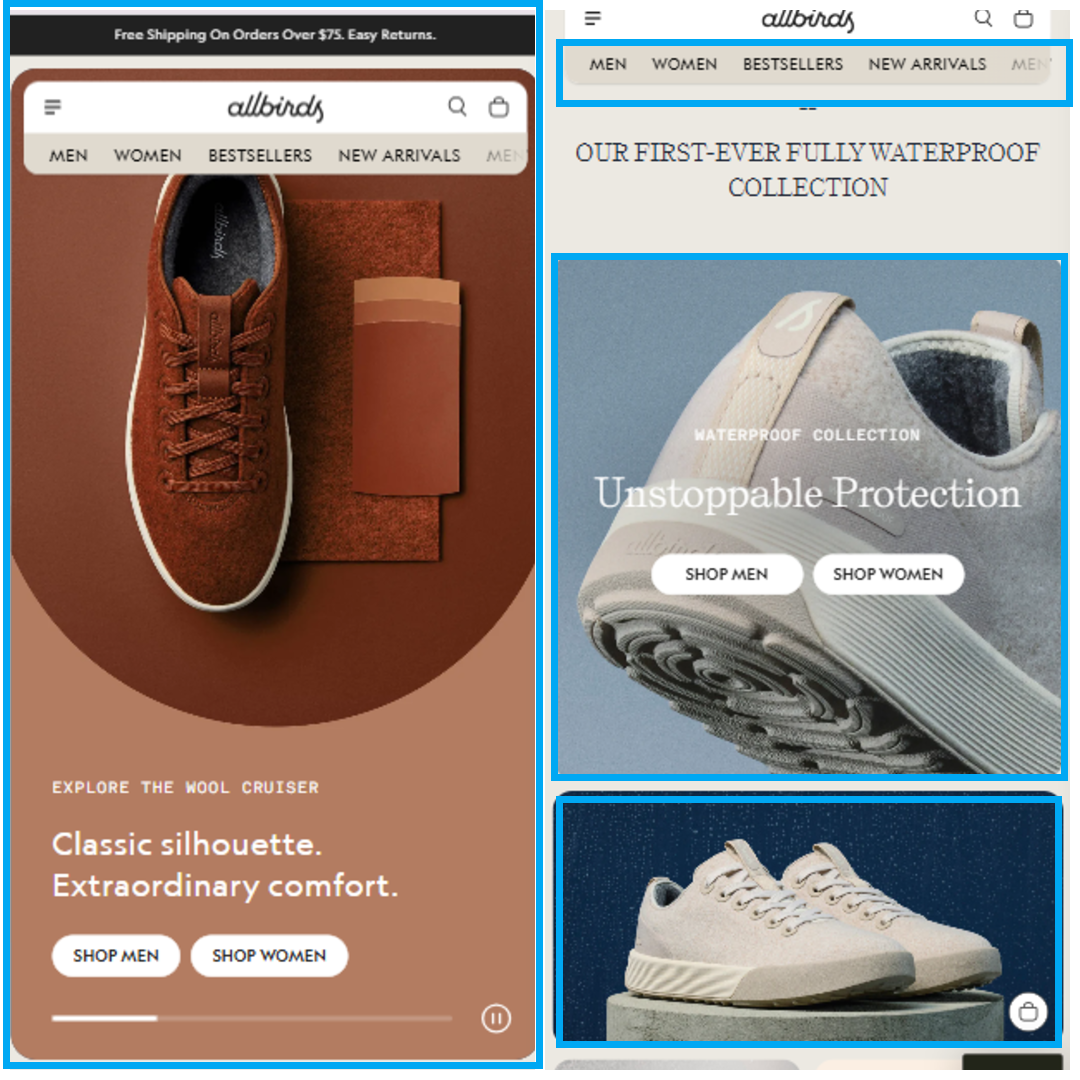
A good example of this is Allbirds, whose mobile site is uncluttered with clearly defined categories like Men, Women, and New Arrivals. The site loads quickly, and product images use minimal backgrounds—making the shopping experience smooth and accurate for mobile users.
SEO-Friendly URL Structure: Create logical, hierarchical URLs that both humans and search engines can understand:
This markup increases your chances of winning rich snippets in search results, which can boost click-through rates considerably.
Content Optimization with AI
AI-Powered Keyword Research: Move beyond basic keyword tools with AI systems that understand semantic relationships:
Use AI tools to identify topics and questions related to your products
Analyze search intent patterns rather than just keyword volume
Identify question clusters your product content should address
Product Page Optimization Using AI: AI can dramatically enhance product content quality:
Generate comprehensive, SEO-optimized product descriptions at scale
Ensure descriptions address common customer questions
Maintain consistent brand voice across hundreds or thousands of products
Include relevant semantic keywords naturally within content
Tools like Yarnit's PDP Generator, can help in changing basic product descriptions into unique, benefit-focused content that talks in your brand voice.
Creating Useful Content Beyond Products: Use AI to develop supporting content that drives traffic and builds authority:
Comprehensive buying guides that answer pre-purchase questions
Product comparisons that help customers make decisions
How-to content that demonstrates product usage
FAQ sections that address common concerns
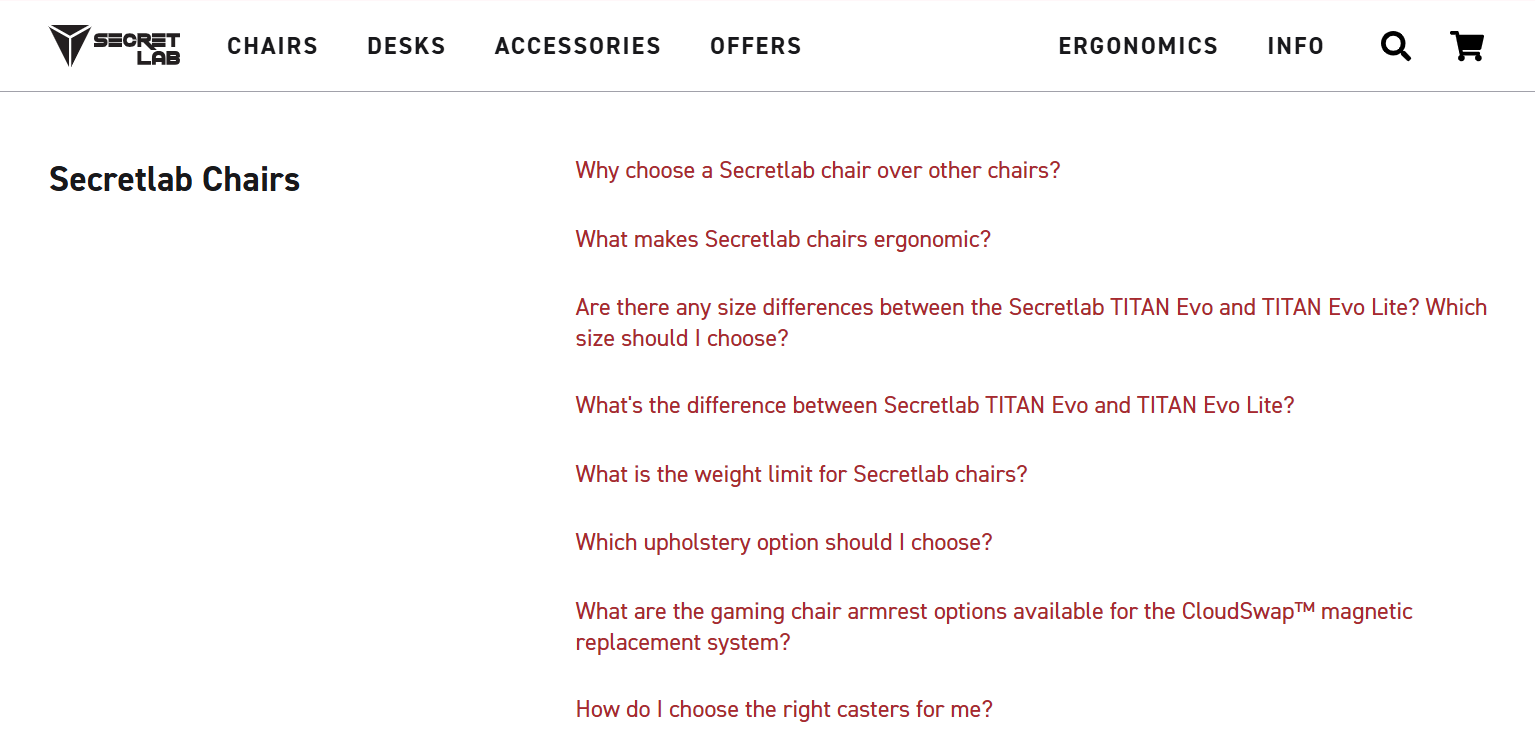
For instance, Secretlab Chairs does this effectively through its FAQ section. The brand not only answers common customer queries but also categorizes them into product-specific and order-specific sections, making it easier for shoppers to find exactly what they need.
Competitive Research and Social Integration
AI-Enhanced Competitor Analysis: Use AI tools to identify gaps in your competitors' content strategy:
Analyze competitor product pages for missing information you can provide
Identify questions competitors aren't answering well
Find keyword opportunities they've overlooked
For a competitor analysis of your product use AI tools like Ask Yarnit—its competitive intelligence capabilities help analyze competitor websites, extract positioning insights, track trends, and generate actionable recommendations to stay ahead.
Social Signals and Integration: While not direct ranking factors, social signals amplify SEO efforts:
Ensure product pages have easy social sharing options
Use structured data so products appear correctly when shared
Create Instagram shopping integrations with your Shopify store
Build Pinterest-optimized product pins that drive traffic
Use AI to create catchy captions and visuals that help you stand out from your competition.
For Shopify store owners, product descriptions represent one of the biggest SEO opportunities—and challenges. Yarnit's PDP Generator solves this by:
Creating unique, SEO-optimized product descriptions at scale that maintain your brand voice
Automatically incorporating relevant keywords in natural, compelling ways
Generating product content that addresses common customer questions
Producing descriptions that convert by highlighting benefits, not just features
Unlike generic AI tools, Yarnit is specifically designed for ecommerce product content, understanding the unique requirements of Shopify SEO and product page conversion.
Identifying content gaps in your product categories
Planning comprehensive content strategies around product lines
Measuring content quality against competitors
Best Practices for Shopify SEO Optimization
Brand Voice Consistency
Maintaining a consistent brand voice isn't just good branding—it's good SEO. Modern search algorithms evaluate content cohesiveness across your site. Use AI tools to ensure your brand voice remains consistent while still incorporating SEO elements.
Storytelling in Product Descriptions
Products with compelling stories get shared more, linked to more, and convert better. Use AI to help craft consistent narrative elements that showcase:
The problem your product solves
How it was developed or sourced
Why materials or features were chosen
Who the ideal user is and how they benefit
Local SEO for Shopify Stores with Physical Locations
If you have brick-and-mortar locations connected to your Shopify store:
Create individual location pages optimized for local search
Implement store locator functionality with structured data
Ensure Google Business Profile listings are connected to your Shopify store
Use localized content that mentions neighborhoods or regional terminology
Shopify SEO in 2025 requires a comprehensive approach that embraces both technical excellence and AI-enhanced content creation. The stores seeing the greatest success are those that:
Optimize technical elements for both traditional search engines and new AI-based discovery
Create product content that genuinely answers customer questions and addresses needs
Use AI tools strategically to scale optimization efforts without sacrificing quality
Maintain brand consistency while implementing SEO best practices
By implementing these strategies and utilizing tools like Yarnit, your Shopify store can achieve better visibility, higher engagement, and increased conversions in an increasingly competitive landscape.
Ready to transform your Shopify store's SEO performance? Try Yarnit's AI-powered PDP Generator today and see how optimized product content can drive real business results.
FAQs
Q1. How has Shopify SEO changed in 2025? A. Shopify SEO now blends AI tools with traditional strategies to focus on content relevance, site speed, mobile optimization, and brand authenticity.
Q2. Which AI tools improve Shopify product descriptions? A. AI tools analyze competitors, identify high-impact keywords, and generate consistent, brand-aligned product descriptions at scale.
Q3. How does AI assist with technical Shopify SEO? A. AI audits site structure, finds issues like broken links, optimizes loading speed and mobile usability, and applies schema markup automatically.
Q4. Will AI content harm my site’s authenticity? A. No. When used wisely, AI drafts content that your team refines to maintain brand voice and genuine customer connection.
Q5. How can AI analyze Shopify competitors? A. AI uncovers keyword gaps, content strategies, backlinks, and product positioning to help you build a targeted SEO plan.
Q6. What role does social media play in Shopify SEO? A. AI optimizes posting schedules and content, driving traffic between social channels and your store to boost rankings.
Q7. How do I measure AI-enhanced SEO success? A .Track organic traffic, speed, bounce rates, engagement, and conversions; AI analytics highlight top-performing optimizations and ROI.
See exactly why your Product Detail Page isn't converting
Thank you! Your submission has been received!
Oops! Something went wrong while submitting the form.